Friday, August 2, 2013

Ji's final


[Post 1] - First Post
A video relates to pinhole photography on youtube.

 
A photo taken by a pinhole camera from internet:

______________________________________________________________________________

[Post 2] - On Two usages of Photography Mentioned in Class
"Into the box" And "Outside the Box" Photography
1. Photography that records, reproduces, represents something else. This kind of photograph exploits the function and advantage of photography. Journalist's photo, tourist's photo, selfie, any kind of photograph that use photography as a tool falls into this category. I like to think of it as the "photography that tells you something".

2. Photography about photography itself. This type of the photograph is conscious about photography as a medium. It is aware of the process, limitation and uniqueness of photography.  This type of photography asks the question of "What is photography?""What can photography do?", etc.
______________________________________________________________________________

[Post 3] - Short Descriptions on Given Topics

Normal lens has the focal length equal to the diagonal size of paper/film. With the 5 by 7 inch paper most of us are using in this class, we need to build a box with roughly 9 inches (23cm) focal length to achieve a normal perspective. Normal lens/pinhole creates very similar perspective to that of human eye. In my practice, I often take advantages of the "normal effect" of this lens to create a sense of daily life and intimacy wit the subject in my street snapsot and casual portrait. 

A photograph I took with normal lens in Rome:

Wide Angle lens has shorter focal length than normal. All cameras built with IKEA wooden box in our class are wide angle. It has a wider angle of view. Visually, wide angle exaggerates the perspective, "pulling" the closer object closer and bigger, and "pushing" the background further awaya and smaller. I learnt to utilize wide angle to create interesting leading lines and dramatic contrast between foreground and background mostly in landscape/architecture photography.

A photograph of MAXXI I took with wide angle lens.

Telephoto lens magnifies the object and compresses the perspective. Visually, it pulls the foreground and background togeter, as Professor Serafino has demonstrated with our lined-up group portrait, where the distance between the first and last person in the line seems shorter than it should be. Building a telephoto pinhole camera gives you less distortion in perspective, which is generally the desirable effect in portraiture.

A photograph I took with a 300mm in The Vaccines concert in Milwaukee.
______________________________________________________________________________

 [Post 4] Presentation: Cindy Sherman

Cindy Sherman uses photography in her work, but she is not a photographer.

Most of Sherman's work is self-portrait. In her studio, she is the photographer, director, actor, subject, and makeup artist at the same time. Sherman begins shooting with 35mm black and white, then turn to larger color format. Her photograph does not possess a compositional consistency. Instead Sherman studies photograph of films, magazine centerfold, fashion photography. 

Untitled Film Still series presents heroins character Italian neoclassical film or noir film in 1940-60. This series shows how Sherman, as a woman, presents the way male-dominant film industry likes to present woman. By omitting the title, Sherman makes the identity of the character ambiguous. The expression of the character, her eyes, her makeup, clothes, and the background are all controlled to reveal only the minimum about the identity of that character.

In her later series, Sherman discusses femininity with a more straightforward approach. She makes the reference on the composition and style of magazine centerfold and fashion photography, but slightly off. In this part of her work, She presents the objectified femininity in mass media. She portrait herself as victim, superficial blondes, and other female characters that have been the daily consumption of mass media.


Ji

Umberto's Final


In this first picture a landscape is represented. The clouds appears to work as sort of arrows pointing towards the billboard, the focus and subject of the image. However, the subject is critical point in the image. What makes this picture particular is the strong division of the picture in two colors, green and blue. Everything is about the environment.


The second picture represents a scene of ordinary and regular life. The colors and its usage/message in the picture are very relevant since are one of the few things that allow the photographer to communicate something to the audience. Lines are slightly marked, the vertical axis is associated to the billboard, while the parked cars represent the horizontal axis


In the last picture, ordinary life is represented to its fullest. Colors are very dull, except for vivid red of the Volkswagen truck. Vertical lines play a prominent role in the image, delineated by the three buildings/ The hills in the background are out of focus, meaning that the DOF ends right after the central grey building.


1) The camera obscura can be considered the embryonic form of a camera. It is a

device (usually of box) that through an hole on a side projects on image. The lights that enter the hole hit a surface inside and reproduced and upside-down image (usually on a film paper). As the hole it is made smaller, the image results sharper and clearer however also dimmer. Nevertheless, a too small pinhole makes the sharpness worse


7)A telephoto lens is a long focus lens the focal length is longer the physical lens. This is achieved by extending the light way to generate a long-focus lens in a shorter design. Telephoto lenses and long-focus lenses share the same angle of view. Usually telephoto lenses are dived into two groups: medium telephoto, lenses that range between a 30° and 10° field of view and super telephoto lenses ranging between 8° through less than 1° field of view.


8) The DOF, depth of field, is considered to be the distance between the closest and farthest away where an object can appear clear and sharp in a picture. The depth of great and relevant tool for a photographer allowing him to decide to emphasize a particular subject or area of the picture, a large DOF is called deep focus while a small DOF is called shallow focus


Wednesday, July 24, 2013

Friday, July 19, 2013

Talking about photography


During the last lesson, which was quite eventful, you gained experience working with each other.
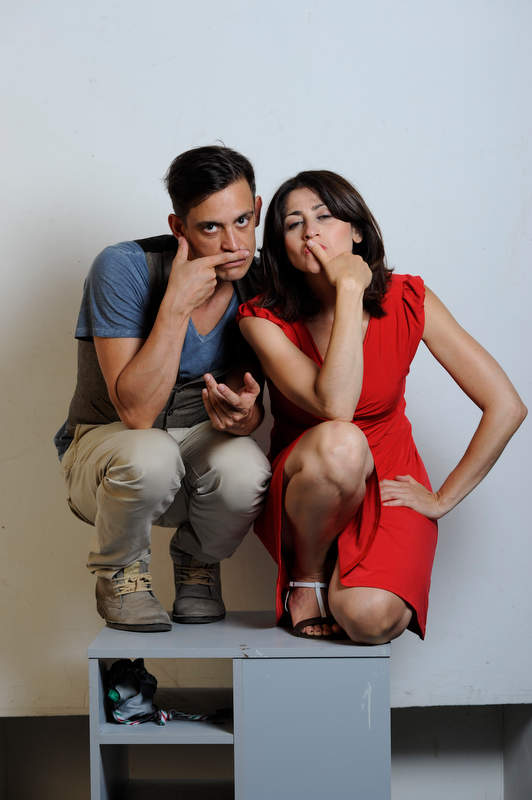
Aglaia and Leonardo, weren't only the “objects” of your shootings, but also the subjects. They not only exhibited themselves but I would say the offered themselves.

Not just simple puppets, they even in some ways directed the shooting.  This was the interesting thing.

As in a “game” between two people pulling a cord between themselves and creating as much tension as possible without breaking it, so photography allows in its action a growth of conscience of the self and the other.

In Italian the work of the photographer is called “servizio fotografico”. So very different in english where the expression used is “photoshoot”.

I have to say that in this case the italian expression is much closer to the sense that I love to give to the work of photographing.

The quality of the relationship between who photographs and who is being photographed is implicit  in the expression “Servizio”.

The photographer offers himself so that whoever is being photographed benefits. The photographer does not present himself  as the executioner of a “ritual”, but rather as the person who allows the subject to present themselves in such a way that their self awareness is increased. To observe yourself, to measure yourself, to acknowledge yourself and to know yourself.

That is why I like the expression “SERVIZIO fotografico”.

The expression “Shoot”,is surely more apt for a type of photography in which the photographer takes the aim; it has a very “military” ring to it.

Even Henry Cartier Bresson used to say that a photograph: “is to put in the same line of sight the mind, the eyes and the heart. A way of living”. An approach to the whole context that has certainly produced some masterpieces, but to which I personally feel remote.

Thursday, July 18, 2013

Il vero - l’immaginario” The Real and the Unreal

Il vero - l’immaginario”       The Real and the Unreal  

A group of young people hunt for the right spot and the right instant, for the fleeting color awaiting their attention. They don't photograph what they see for what it is in itself, but rather they set into motion a change of meaning, pushing the objective toward the symbolic.
For the one who takes pictures, this is not a neutral process. But do neutral processes even exist for those who make works or objects of art?

Whatever the experience of the author, whatever the technique in use, and even when falling short of the status of art, the object produced is the product of a powerful, changeable subjectivity.

Thus John, photographing in color with the Nikon pinhole, shows us presences from outer space in the ancient city. (Literary precedents come to mind, such as Ennio Flaiano's Un marziano a Roma.) Emily indeed finds a flying saucer landing next to the Tevere.

Each of these young photographers has begun to understand that with a digital camera, or even with the slow procedure of the large-format view camera, or even more, with the pinhole camera, we can recharge reality with a metaphorical, even metaphysical sense.  Most of all, they have learned to respect the time needed for attentive observation, dedicating themselves to whatever it is they are observing, be it a plant, stone, or face, reproducing a reality that only superficially resembles the real, and often creating a truth that is objective and imaginative at the same time.
 

Photo exhibition by students of John Cabot University's July courses in photojournalism, digital and analog (pinhole) photography.

Professors Serafino Amato, Donald  Winslow,  and Jochem Schoneveld 
 

location of the exhibition: Studio 9

Via della Moretta
Direttore Patrizia Rufini
Monday, July 29, 6:30 p.m.

Thursday, July 11, 2013

Monday and Wednesday class

On Monday we will work at Fiorentini to check the pinhole cameras.
Inside and outside we will check the exposure.

Print session in the dark room and film developing process

Still life pictures with the pinhole and the 4x5 inches camera

On Wednesday the actress Aglaia Mora will be with us for a Photo Session

Dear Students

As you've seen in these first two weeks of lessons, (sorry if they were a bit tiring) every action has produced a result.
We didn't just photograph what we were seeing, but we performed a change of meaning.
We pushed  the objectivity towards a type of symbolism.
Not a neutral process for the person who photographs.
But there is no neutral process in the realization of a work of art, no matter what technique you're using.
Even if ours are not works of art we have added a subjective interpretation.
And so John, upon my suggestion of making a color photograph with the nikon pinhole, captured "alien" presences in the ancient city. ( there are literary references that speak of this, Ennio Flaiano wrote something called "A Martian in Rome"-"Un marziano a Roma")
Emily even showed a 'flying saucer 'landing.

Me too, in the portraits I did of Pio, with Eva's camera, on a graffiti background, i showed the vulgarity and the non neutrality of the background and the strong manipulative power of the photographic genre.  Sometimes used in a dangerous way in journalistic contexts.

Everyone of you has begun to understand that such a slow means, (like the big format camera or even more so, the pinhole)gives back a metaphoric and sometimes even a metaphysical sense to reality.
A reproduction of reality that only looks like reality on the surface, but which doesn't have the sole purpose of reproducing  reality as it is.

We could (should) discuss this together.
Even in a short course, you have jumped with both feet into the problematics of art using a very simple technical tool.

Thank you for your attentive presence and participation.

Select your photogrpher

Stephen Shore

Simplicity. This is a plain, standard photo that is made interesting because of the colors and reflections.

Going along with his philosophy, this is a boring photo of a billboard that is interesting because of the image on the billboard that blends in with the scenery.

Once again, this is just a living room, but the objects and the old style of the room are interesting to look at.


John Krzmarzick
an American photographer known for his images of banal scenes and objects in the United States, and for his pioneering use of color in art photography.
Stephen Shore's work has been widely published and exhibited for the past forty years. He was the first living photographer to have a one-man show at the Metropolitan Museum of Art in New York since Alfred Stieglitz, forty years earlier. He has also had one-man shows at the Museum of Modern Art, New York; George Eastman House, Rochester; Kunsthalle, Dusseldorf; Hammer Museum, Los Angeles; Jeu de Paume, Paris; and Art Institute of Chicago and has received fellowships from the Guggenheim Foundation and the National Endowment for the Arts. His series of exhibitions at Light Gallery in New York in the early 1970s sparked new interest in color photography and in the use of the view camera for documentary work.

Gianni Berengo Gardin


Herbert Listz


Cindy Sherman


Helmut Newton